The cheapest solution will be the most expensive
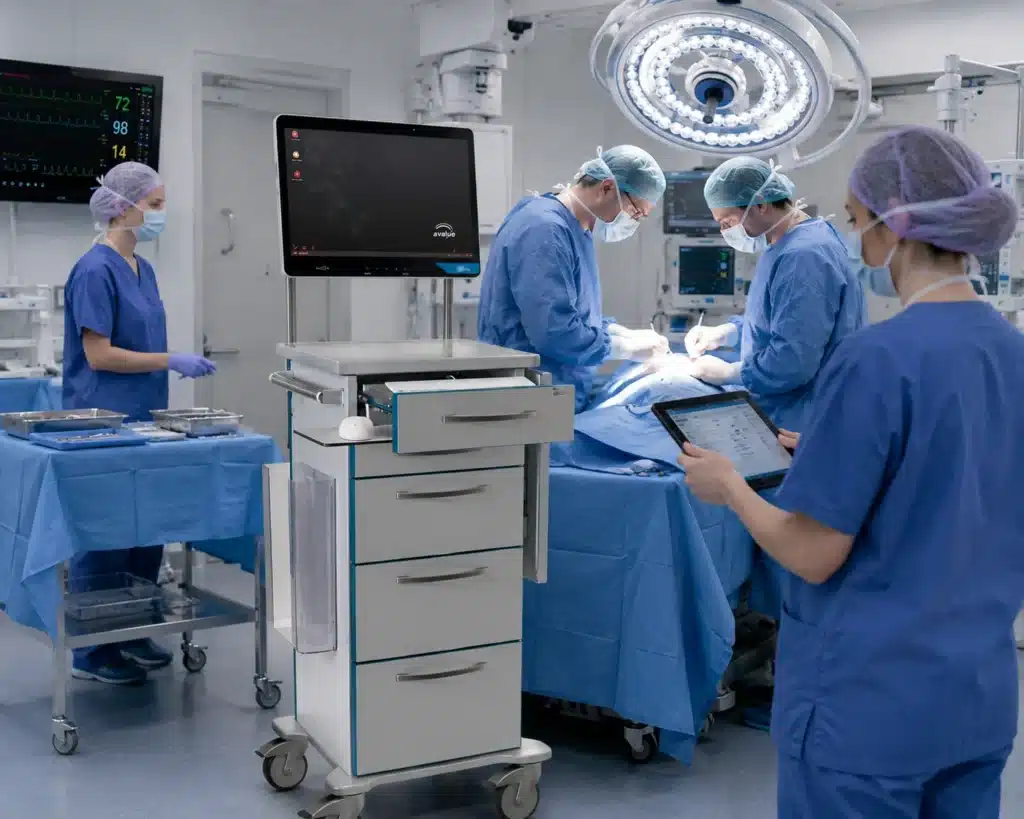
When hospitals invest in new computers, screens or mobile workstations, the price is naturally an important factor.
However, experience shows that the lowest purchase price does not necessarily result in the lowest total cost over the solution's lifetime.
For medical hardware, the investment isn't just about the product itself. It's also about reliability, lifespan, integration, and support over many years.
An incorrect choice can create challenges that only become apparent after installation – and which may ultimately prove far more expensive than the original saving.
How long should the solution be in operation?
Many hospitals work with investments that are expected to perform steadily over a longer period.
Therefore, the product's lifespan is an important factor.
If a hardware platform is discontinued shortly after implementation, it can create challenges with:
- Spare parts
- Extensions
- Standardisation across departments
- Future replacements
Long product lifecycle periods make it easier to maintain a consistent IT platform and reduce the need for ongoing replacements.
Is the solution developed for hospital environments?
Not all IT equipment is developed for clinical use.
Hospitals require special provisions for:
- Electrical safety
- Documentation
- Cleaning and disinfection
- Operational safety
- Integration with medical technology equipment
Therefore, many hospitals opt for solutions that are developed specifically for the healthcare sector and are documented for use in clinical environments.
It creates security for users, IT departments, and medical technical departments alike.
What does downtime cost?
When a computer in an office crashes, it can be annoying.
When critical equipment at a hospital doesn't function as expected, the consequences can be significantly greater.
Downtime can, among other things, lead to:
- Interrupted workflows
- Delays in documentation
- Increased workload for the IT department
- Extra service visit
- Loss of productivity
For this reason, many hospitals choose hardware with a focus on stable operation rather than solely focusing on the purchase price.
Can the solution be integrated with existing systems?
Modern hospitals work across many digital platforms.
Hardware skal ofte fungere sammen med:
- Electronic patient records (EPR)
- Medical imaging
- Laboratory equipment
- Patient monitoring
- Clinical information systems
Even small compatibility issues can create unnecessary challenges in everyday life.
Therefore, integration should be considered already in the procurement phase.
Who helps if something goes wrong?
Support and service are often only assessed when the need arises.
However, access to technical support, spare parts and advice can be of great importance throughout the solution's lifecycle.
Many hospitals therefore choose suppliers who can offer:
- Technical advice
- Local support
- Access to spare parts
- Long-term product support
This provides greater security for both the IT department and clinical users.
The best investment is about more than price
When hospitals invest in medical hardware, the assessment should include more than the purchase price.
Factors such as lifespan, reliability, integration, service, and documentation often have a greater impact on the total cost over time.
Therefore, the cheapest solution at the time of purchase is not necessarily the most economical solution in the long run.
At Sensor Medical, we help hospitals and the healthcare sector choose computer and display solutions developed for clinical environments, where stable operation, a long service life, and secure integration are crucial.
Contact us and get a solution that works - the first time
Whether your needs are simple or complex, we are ready with professional advice and reliable installation. Contact us today for a no-obligation chat about how we can develop a robust, future-proof solution for your business.